


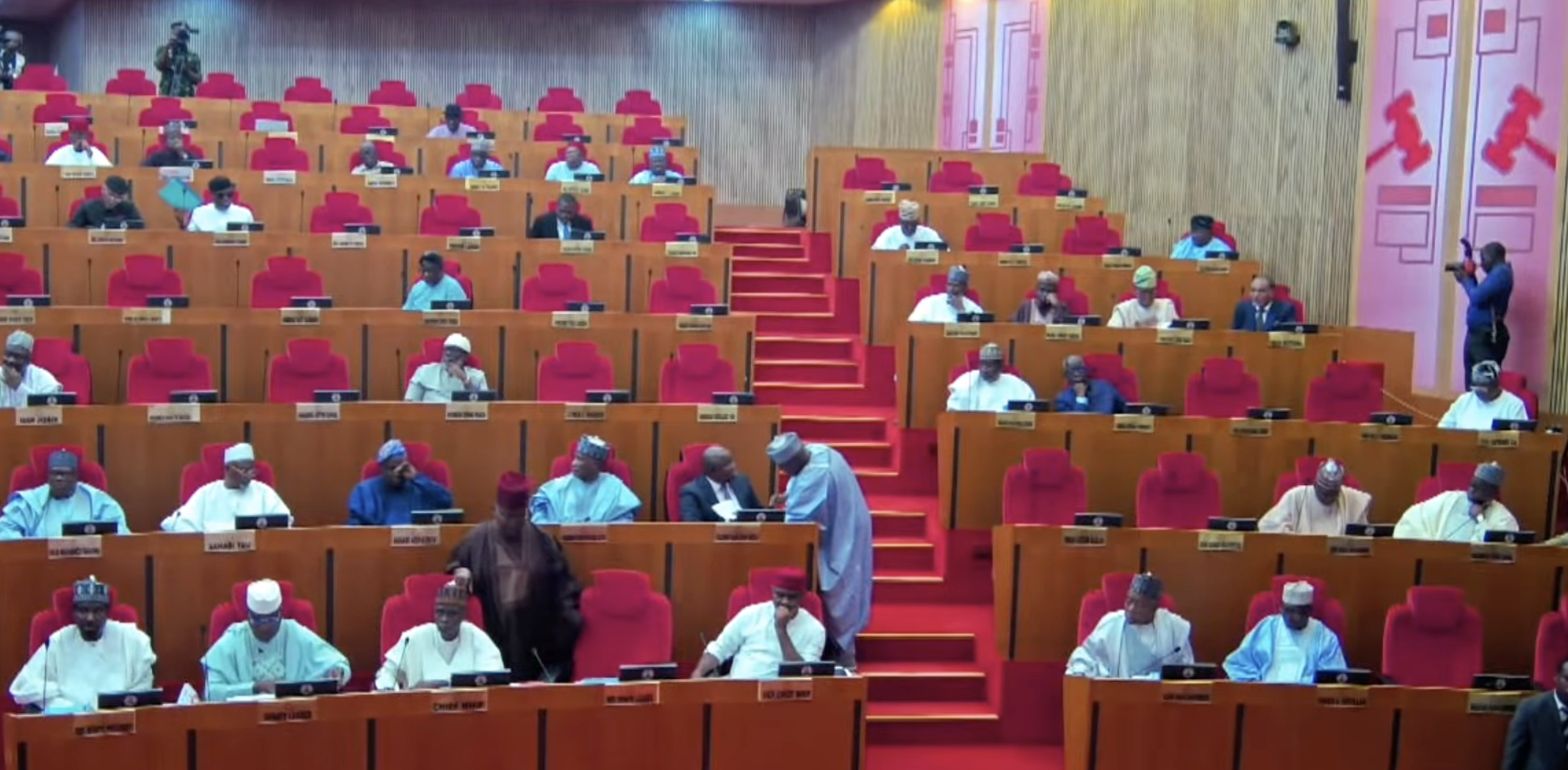
The Senate on Tuesday passed the Electoral Act, 2022 (Repeal and Re-Enactment) Bill 2026 after a stormy plenary marked by sharp disagreements over provisions governing the transmission of election results.
Lawmakers approved the bill following a tense debate that centered on Clause 60, particularly sub-clause 60(3), which permits manual transmission where electronic transmission fails. The provision sparked a heated exchange when Enyinnaya Abaribe (ADC, Abia South) demanded a formal division, arguing that retaining Form EC8A as a fallback option could weaken the credibility of elections.
Abaribe insisted the proviso be deleted, warning that allowing manual transmission after an electronic failure could create loopholes vulnerable to manipulation. He maintained that the integrity of the process would be better protected by making electronic transmission mandatory without exceptions.
The demand drew immediate objections from several senators. Senate President Godswill Akpabio said he believed the request for division had earlier been withdrawn, prompting opposition lawmakers to challenge his assertion. The disagreement quickly escalated, with members raising points of order amid rising tension on the floor.
Deputy Senate President Barau Jibrin invoked Order 52(6) of the Senate Standing Orders, contending that reopening debate on a clause already ruled upon would be procedurally out of order. His intervention, however, failed to calm the chamber as lawmakers traded heated remarks.
The situation briefly degenerated into chaos during a face-off between Abaribe and Senator Sunday Karimi, underscoring deep divisions over the balance between technological safeguards and operational contingencies in elections. Order was later restored after repeated appeals by the presiding officers.
Despite the dispute, the Senate proceeded to adopt the clause as presented, preserving the contested sub-clause. The bill was subsequently passed after consideration of other amendments.
The legislation seeks to overhaul Nigeria’s electoral framework by updating provisions on accreditation, result management, political party compliance, and the deployment of election technology. Supporters of the bill said it reflects lessons learned from previous elections and strengthens mechanisms aimed at improving transparency and efficiency.
Akpabio described the passage as a significant milestone, stating that the bill would enhance the credibility of the nation’s democratic process. He noted that the inclusion of a manual transmission option was designed to address logistical realities, particularly in areas with poor connectivity or technical disruptions.
Several senators aligned with the leadership argued that eliminating the fallback provision could risk disenfranchising voters if electronic systems fail. They emphasized that safeguards embedded in the clause would ensure that manual processes remain verifiable and subject to oversight.
Opposition voices, however, warned that the decision could generate fresh controversies during elections. They urged the Independent National Electoral Commission (INEC) to prioritize technological reliability and minimize circumstances that would necessitate manual intervention.
With Senate approval secured, the bill is expected to be harmonized with the House of Representatives’ version before transmission to the President for assent.
Political observers say the debate highlights enduring concerns about election transparency and the practical challenges of nationwide digital infrastructure. The eventual implementation of the new law, they add, will test Nigeria’s readiness to balance innovation with resilience in electoral administration.