

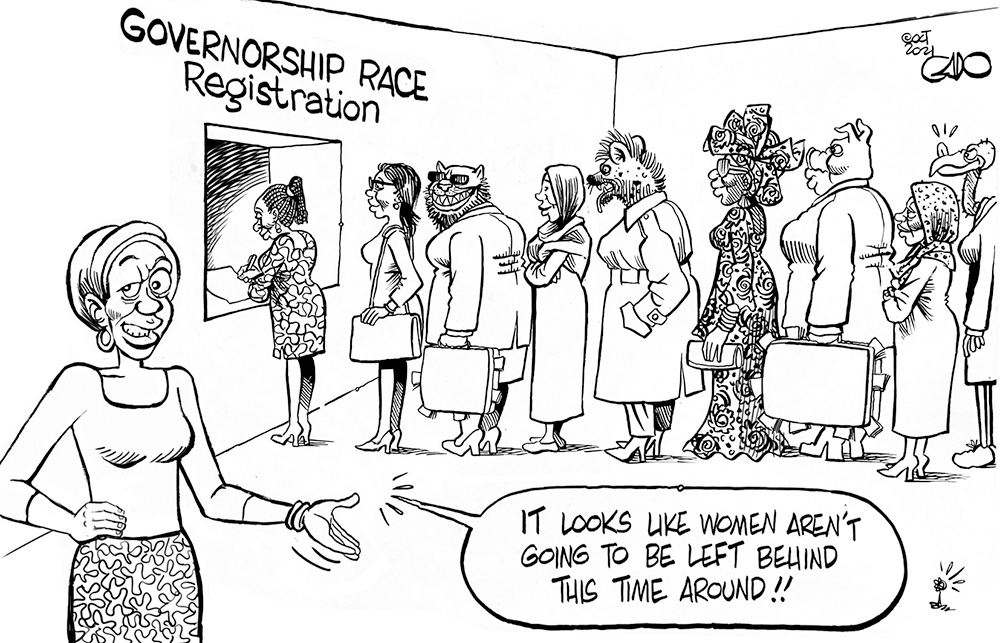
Governorship politics across Nigeria are entering a decisive phase as economic constraints, rising public expectations and shifting federal policies reshape leadership calculations at the state level. With fiscal realities tightening and development demands mounting, governors are confronting a delicate balance between governance performance and political survival.
At the heart of the emerging political tension is money or, more precisely, the struggle to stretch limited resources across competing priorities. State governments, long dependent on federal allocations, are now adjusting to the ripple effects of national economic reforms, fluctuating revenues and evolving tax regimes. The consequences are redefining not just policy decisions but also political strategies.
Debt sustainability has become a central concern. Many states continue to grapple with legacy obligations, while others weigh fresh borrowing to fund infrastructure, healthcare and education. Fiscal experts warn that unchecked debt accumulation could strain future budgets, potentially crowding out essential services. Yet governors argue that investment gaps leave them with few alternatives.
Infrastructure delivery remains both a governance necessity and a political instrument. Roads, bridges, power projects and urban renewal initiatives often dominate state agendas, serving as visible markers of performance. Analysts note that infrastructure projects frequently shape public perception, especially in politically competitive states where incumbents seek re-election or aim to influence succession outcomes.
READ ALSO: Nine Children Rescued from Abduction in Benue State
Wage obligations, meanwhile, have emerged as a sensitive flashpoint. Salary payments, pension arrears and minimum wage adjustments continue to test state finances. Labour unions have intensified pressure on governors, warning against delays and demanding improved welfare packages. For many administrations, payroll management has become a political tightrope.
Economic reforms introduced by the federal government are further complicating state-level planning. Adjustments in subsidy policies, exchange rate frameworks and revenue distribution mechanisms are altering the fiscal landscape. Governors are recalibrating budgets to absorb new realities, while political observers track how these shifts influence local alliances and electoral dynamics.
“The interplay between economics and politics has never been more pronounced,” said a public finance analyst based in Abuja. “Governors must deliver under constrained revenues while navigating intense political expectations.”
Political alliances are already in motion. In several states, early succession battles are reshaping intra-party negotiations, with influential stakeholders positioning for advantage. Incumbent governors often play kingmaker roles, seeking to consolidate legacies through preferred successors. However, such manoeuvres can trigger factional disputes, defections and legal contests.
Within the ruling All Progressives Congress, succession calculations are generating both cooperation and friction. While party structures aim to maintain cohesion, competing ambitions among aspirants frequently test unity. Similar dynamics are unfolding in opposition strongholds, particularly within the Peoples Democratic Party.
Analysts say governance performance is increasingly intertwined with electoral prospects. In a climate of economic strain, voters are placing greater emphasis on tangible outcomes: road conditions, healthcare access, school quality and job opportunities. Governors perceived as underperforming may face heightened resistance, regardless of party affiliation.
Transparency and accountability have also moved to the forefront of public discourse. Civil society groups and policy advocates are calling for clearer disclosure of state finances, procurement processes and debt profiles. Observers argue that transparency can enhance credibility, attract investment and mitigate public scepticism.
Innovation in revenue generation is another defining theme. As federal allocations fluctuate, states are intensifying efforts to expand internally generated revenue (IGR). Strategies include tax reforms, digital collection systems, investment promotion drives and support for small and medium enterprises. However, economists caution that aggressive taxation without economic growth could trigger backlash.
Some governors are exploring sector-specific reforms, targeting agriculture, mining, tourism and technology to diversify revenue streams. Success stories, though uneven, highlight the potential of tailored economic strategies. Analysts note that states able to link revenue innovation with job creation often gain political capital.
Citizen engagement is becoming a strategic imperative. Town hall meetings, participatory budgeting initiatives and digital feedback platforms are increasingly used to bridge gaps between governments and constituents. Political communication experts argue that such engagement can build trust and defuse tensions, particularly during periods of austerity.
Security considerations remain inseparable from governance and politics. In states confronting insurgency, banditry or communal violence, budget priorities often tilt toward law enforcement and social stabilisation programmes. Governors’ handling of security challenges frequently shapes political narratives and voter sentiment.
Despite pressures, governors defend their records, citing fiscal constraints inherited from previous administrations and macroeconomic conditions beyond state control. They emphasise efforts to maintain salary payments, invest in infrastructure and attract private sector partnerships. Critics counter that resource limitations cannot excuse inefficiency or poor planning.
Political observers say the coming months will be pivotal. As pre-election manoeuvring intensifies, governors must navigate dual imperatives: sustaining governance momentum while managing party dynamics and succession politics. Missteps in either arena could carry lasting consequences.
For Nigeria’s democracy, the evolving governorship landscape underscores broader themes of accountability and resilience. Strong state leadership, analysts argue, remains essential for national stability, economic development and grassroots governance. Conversely, fiscal distress combined with political instability could undermine progress.
Ultimately, the trajectory of governorship politics will depend on a complex mix of factors: economic performance, policy choices, institutional credibility and voter perceptions. In an era defined by fiscal constraints and rising expectations, governors face an unforgiving test of leadership.
As states adapt to shifting economic realities, one truth is becoming clearer: governance is no longer judged solely by promises or political loyalty, but by measurable outcomes. And in Nigeria’s intensely competitive political arena, performance may prove the most decisive currency of all.